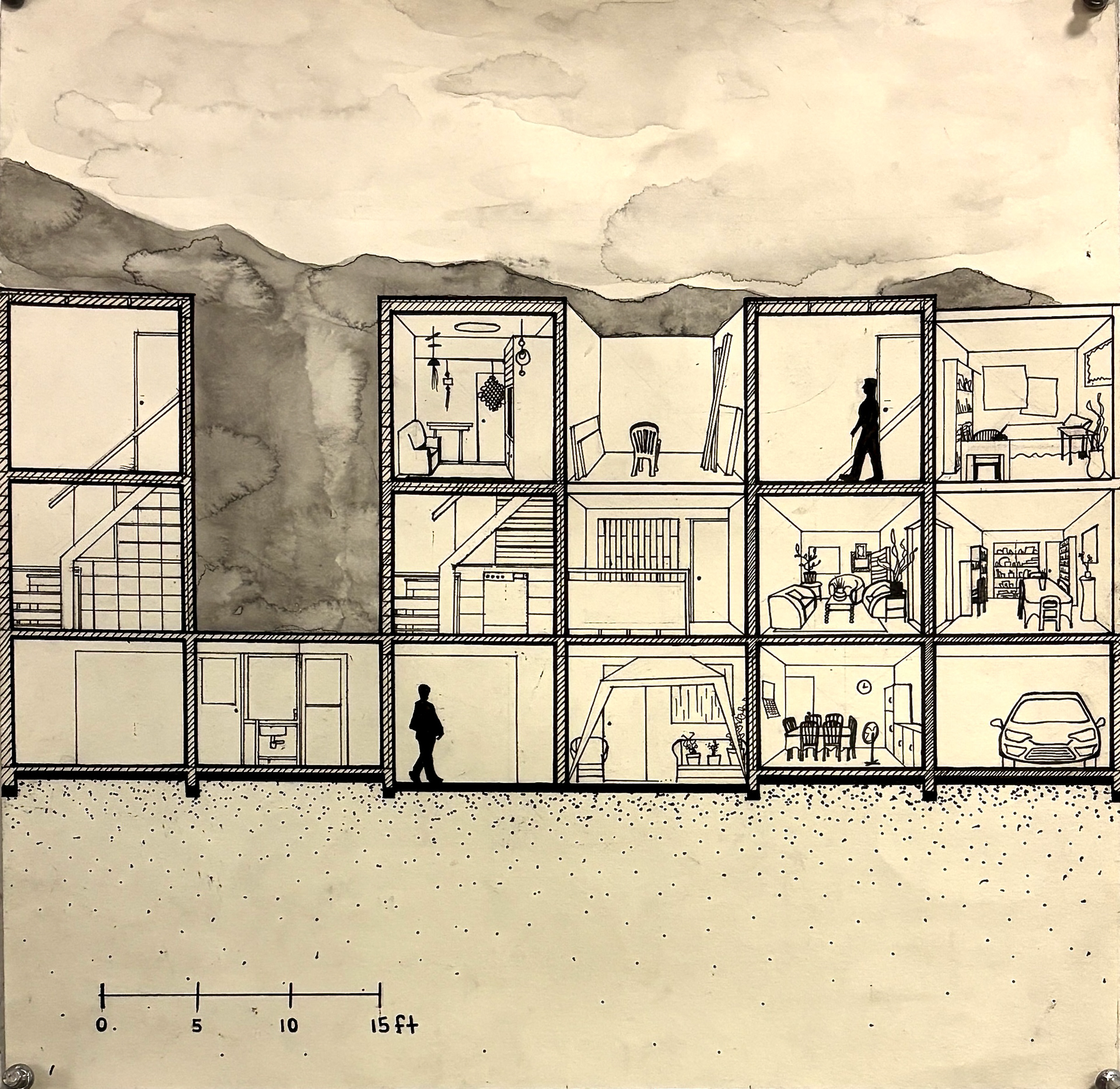
In a section, the Quinta Monroy housing reads as a concrete frame with something missing. Each
unit is built as a three-story structure with a set of stairs, but one half of the volume is left open.
What is then provided to the public is not a complete house, but an infrastructure with an empty half,
which is left to the inhabitants’ design. This decision to provide a template on which a house can be
further built changes the meaning of social housing. Instead of reducing the house to fit the subsidy,
the section is sized for a larger, middle-class home, and only part of it is constructed. As families fill
it over time, the section evolves. Walls are added, and rooms expand so that the uniform concrete
frame begins to reflect individual needs.
unit is built as a three-story structure with a set of stairs, but one half of the volume is left open.
What is then provided to the public is not a complete house, but an infrastructure with an empty half,
which is left to the inhabitants’ design. This decision to provide a template on which a house can be
further built changes the meaning of social housing. Instead of reducing the house to fit the subsidy,
the section is sized for a larger, middle-class home, and only part of it is constructed. As families fill
it over time, the section evolves. Walls are added, and rooms expand so that the uniform concrete
frame begins to reflect individual needs.
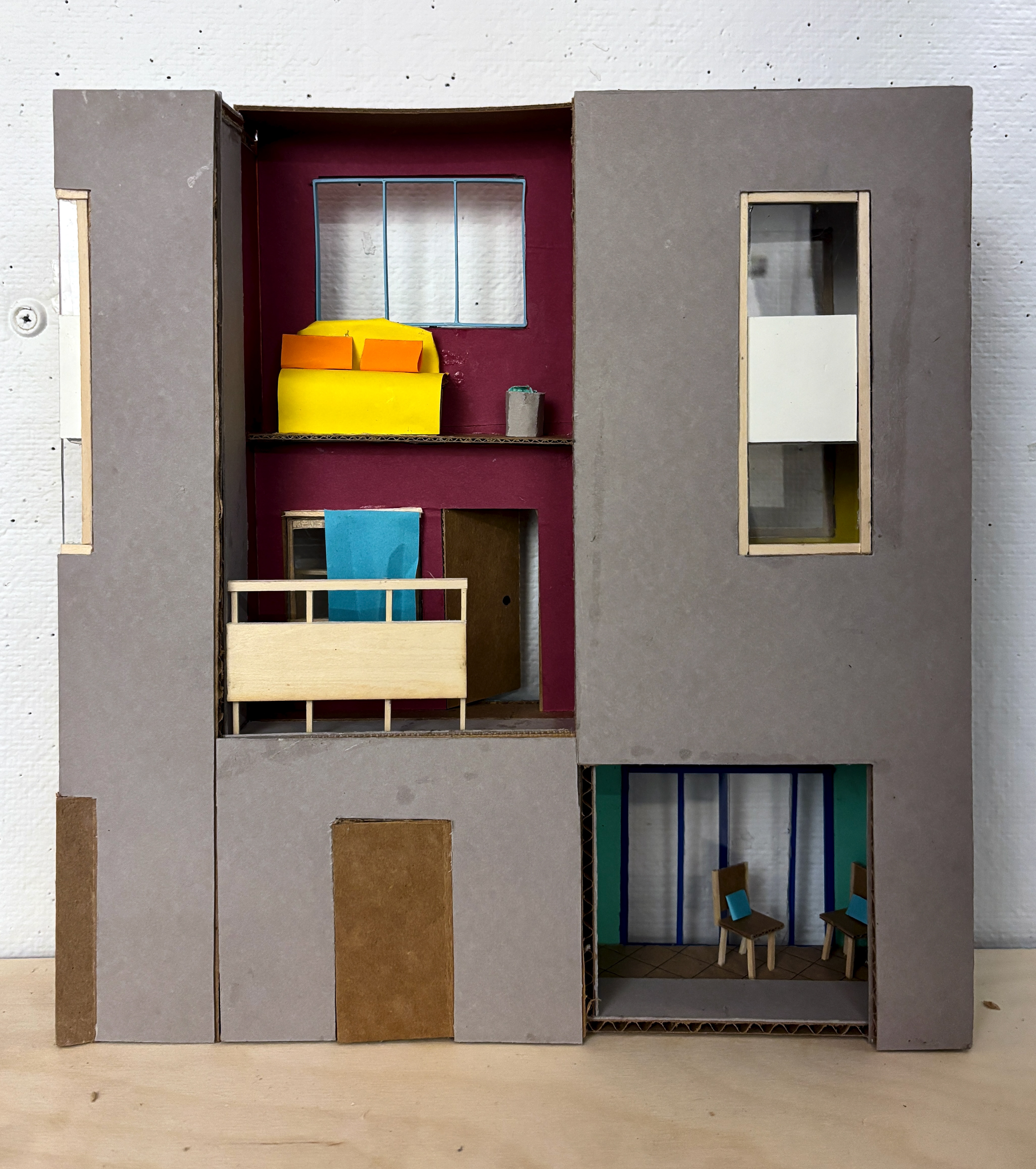
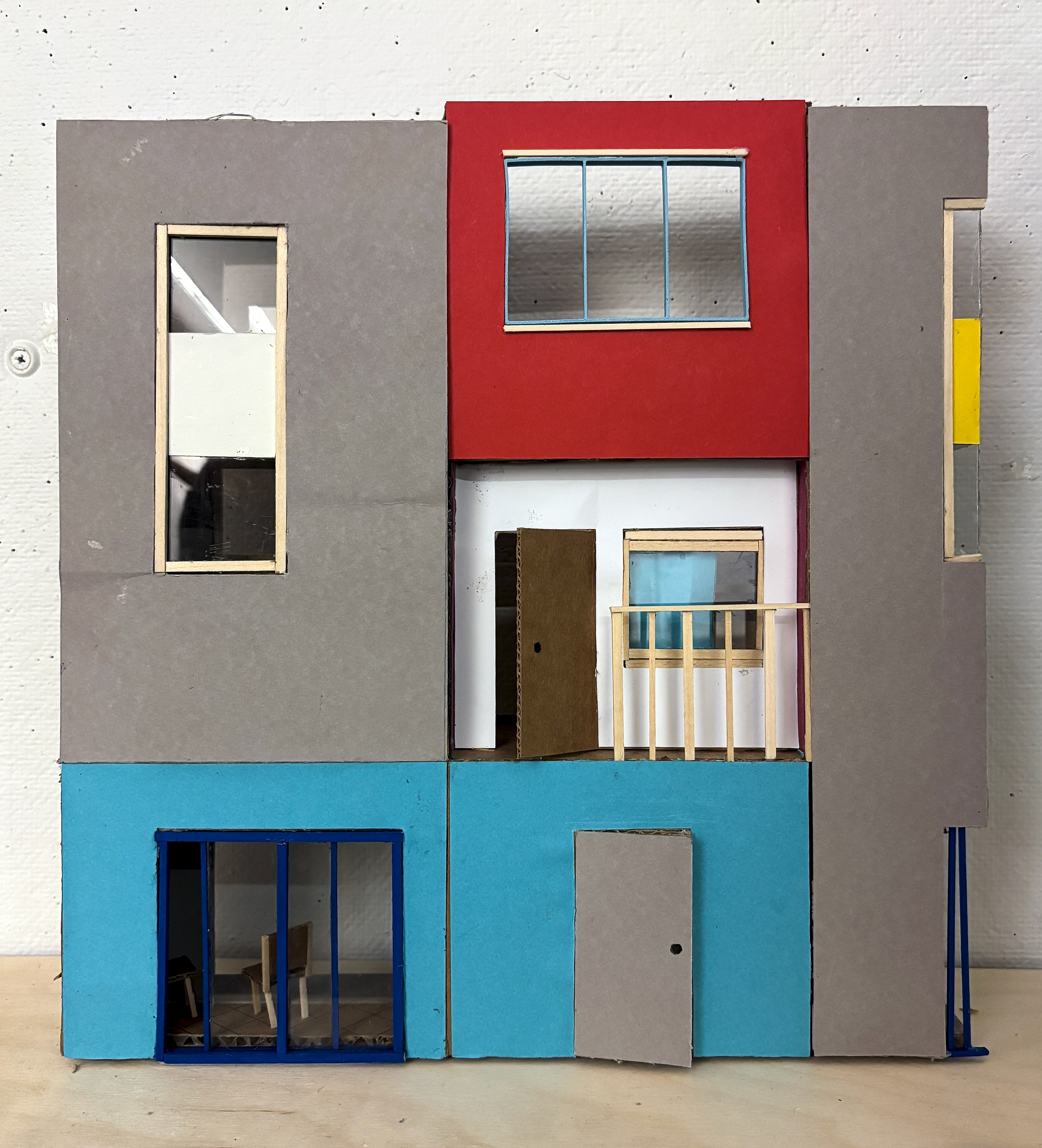
The section, therefore, shows housing as a process rather than a fixed condition. It balances density
and affordability while allowing social mobility. By giving residents a structural skeleton instead of
a finished object, the building creates space for adaptation and long-term stability without losing its
urban order.
and affordability while allowing social mobility. By giving residents a structural skeleton instead of
a finished object, the building creates space for adaptation and long-term stability without losing its
urban order.
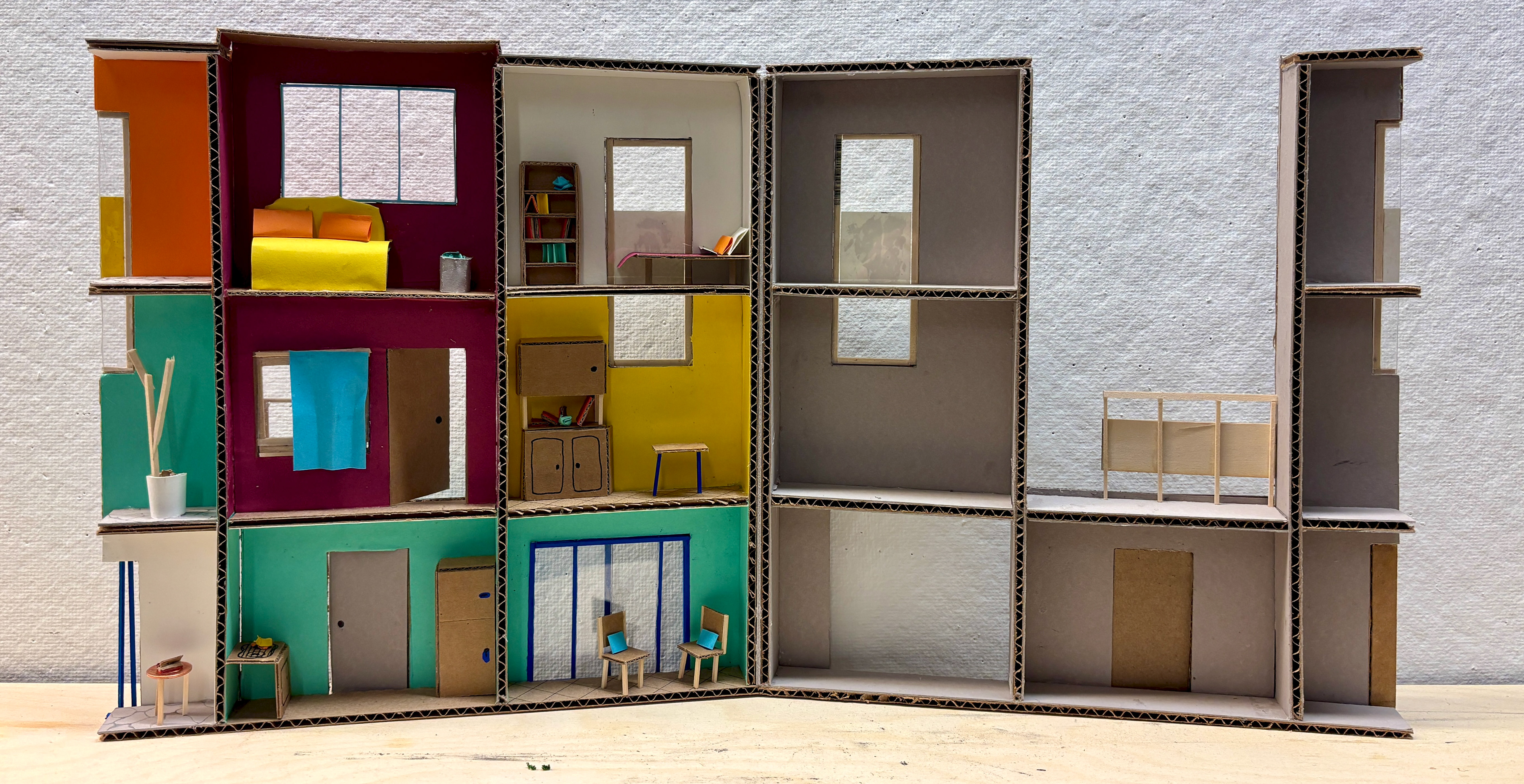
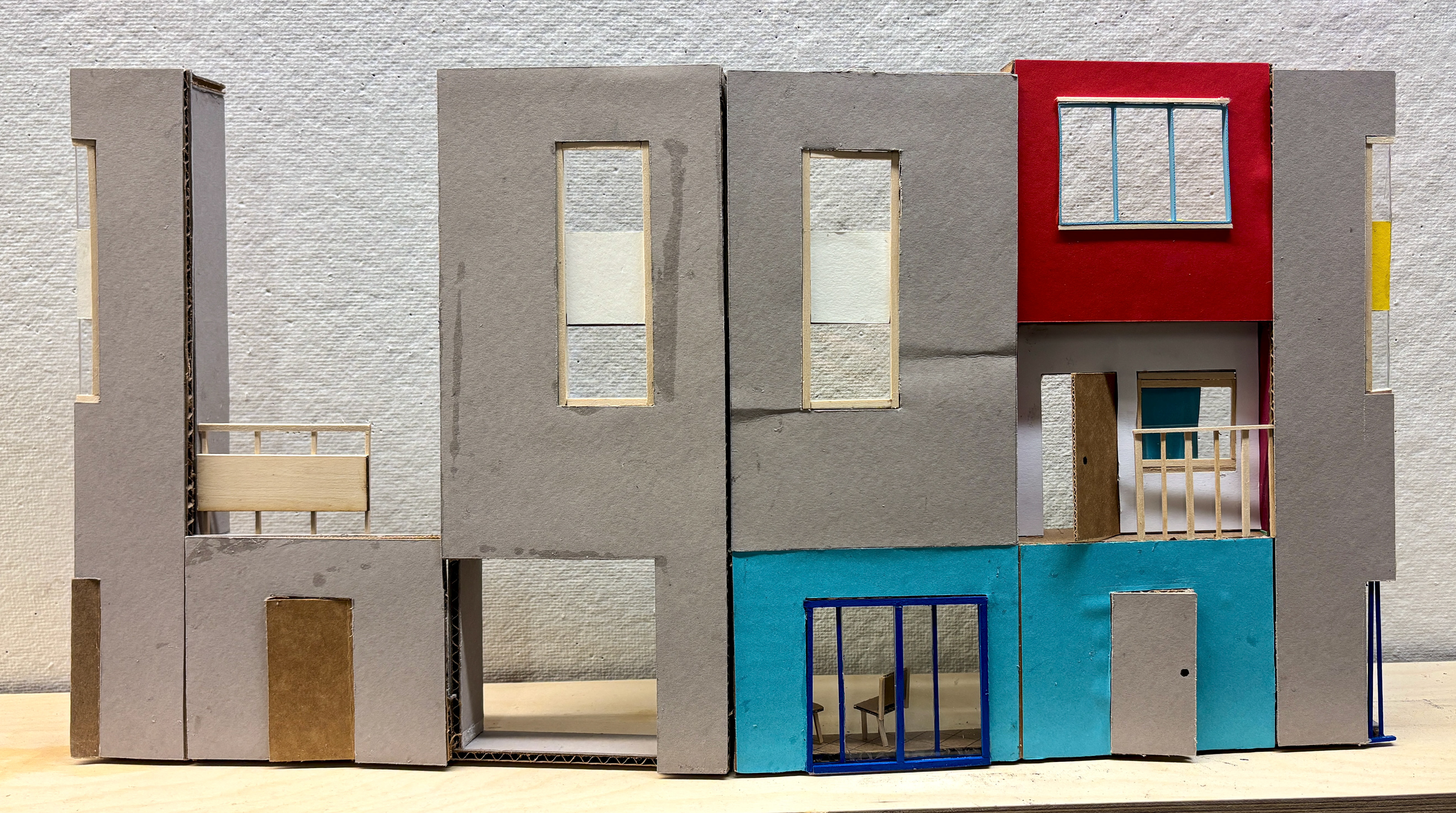
Handmade using cardboard, wood, cardstock and acrylic